
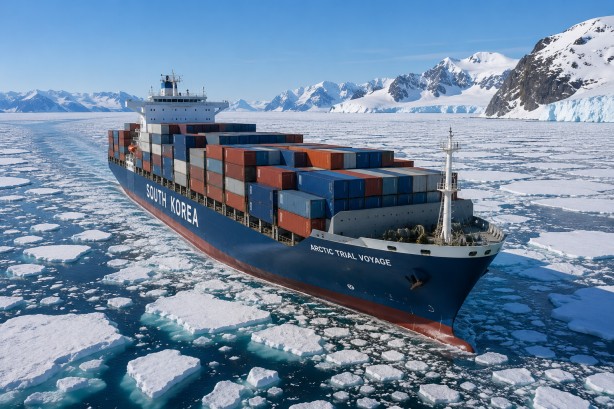
In a strategic move to explore alternative shipping routes, South Korea has embarked on its inaugural trial container ship journey via the Arctic. This venture aims to assess the feasibility of the Northern Sea Route as a viable corridor between Asia and Europe, especially in light of disruptions impacting traditional trade pathways. Departing on August 23 from Busan New Port, the vessel PanStar Acro is charted to make stops in Felixstowe in the UK, Rotterdam in the Netherlands, and Gdansk in Poland, before its return journey to South Korea. This entire voyage is projected to span approximately 45 days.
The Northern Sea Route, skirting along Russia’s Arctic expanse, presents a significantly shorter alternative compared to the conventional Asia-Europe passage through the Suez Canal. According to insights from the Korea Institute for International Economic Policy, this Arctic route could potentially reduce the journey by around 7,000 kilometers and save about 10 days. South Korean authorities are optimistic that this pathway could ultimately serve as a substitute for Middle Eastern shipping lanes, particularly as geopolitical tensions and advancements in maritime technology drive interest in more efficient routes.
This trial comes on the heels of a similar endeavor by a Chinese container ship earlier in the month, underscoring a growing intrigue in Arctic shipping possibilities. Analysts suggest that South Korea is keen to explore this route further to maintain competitive parity with China as Arctic navigation for commercial purposes gains momentum. Nevertheless, the voyage is not without its challenges. There are concerns that South Korean vessels might face obstacles related to Western sanctions on Russia, given that navigation and weather services for the Northern Sea Route are predominantly Russian.
Environmental advocates have also voiced apprehensions regarding the potential ecological impact of increased Arctic shipping traffic. The region is already grappling with rapid climate change, including warming temperatures and diminishing sea ice. The potential environmental ramifications could exacerbate these existing issues, prompting calls for careful consideration of the ecological consequences associated with expanded shipping activities in the Arctic.