
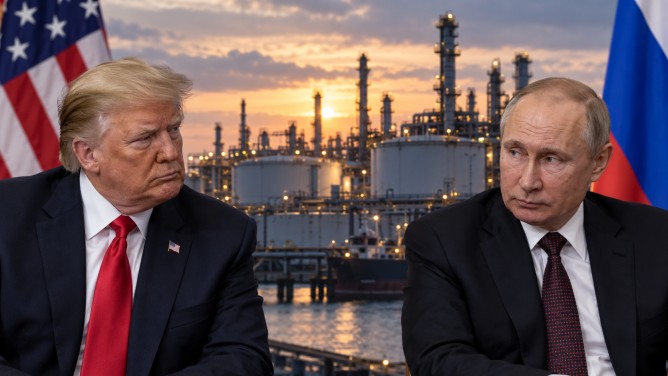
In a surprising move, US President Donald Trump has announced an agreement with Russian President Vladimir Putin to boost diesel supplies from Russia to the United States. This development marks a significant deviation from Washington’s existing policy stance towards Moscow, especially in light of ongoing sanctions imposed due to Russia’s invasion of Ukraine.
Trump revealed that the agreement would initiate with an initial shipment of over 300,000 tonnes of Russian diesel, with further deliveries anticipated in the coming months. He emphasized that reducing fuel costs for American farmers, ranchers, and truckers is a top priority for his administration.
The announcement, however, has sparked debate over the future of US sanctions on Russia. Ukrainian President Volodymyr Zelenskyy criticized the deal, expressing concern that increased energy revenues could bolster Russia’s military actions in Ukraine. Zelenskyy’s comments came as US and Ukrainian officials were engaged in discussions aimed at resolving the ongoing conflict.
The Kremlin confirmed discussions on energy supplies and the Ukraine conflict during the Trump-Putin call, with Russian officials indicating readiness to supply oil and petroleum products to global markets. In response to the agreement, the US Treasury Department issued a temporary license, permitting specific Russian diesel shipments to reach international markets. This exemption, providing some sanctions relief, is set to remain in effect until April 2027.
The decision has faced criticism from US lawmakers who argue that loosening restrictions could weaken efforts to pressure Moscow into ending its military campaign. There is also uncertainty about how this might affect Washington’s broader sanctions policy against Russia.
Energy analysts have cautioned that the influx of Russian diesel may not significantly lower fuel prices, as these shipments might simply be redirected from existing clients to new ones. Russia has also encountered domestic supply challenges following attacks on its oil refineries.
This agreement underscores the intricate dynamics of geopolitical conflicts on global energy markets, as the United States grapples with high fuel costs while attempting to balance its economic interests with its diplomatic stance on the Ukraine crisis.