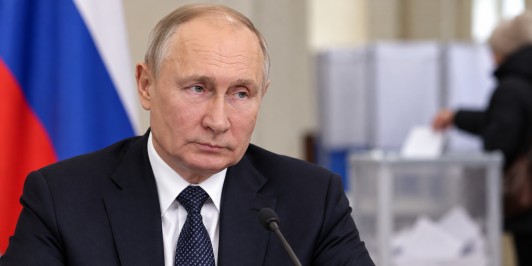
In a recent statement, Russian President Vladimir Putin claimed that the high voter turnout in Russia’s parliamentary election signifies public endorsement of the government’s military agenda, particularly its actions in Ukraine. The election, which took place from September 18 to 20, recorded a turnout of 59.3%. Putin interpreted this participation level as a sign of the populace’s confidence in the government’s current policies and expressed this sentiment to Russian soldiers involved in the Ukraine conflict.
According to near-final results, Putin’s ruling United Russia party secured over 57% of the vote, translating into 355 out of 450 seats in the State Duma. This outcome grants the party a commanding presence, holding nearly 80% of the legislative body’s lower house. The elections were conducted under stringent political conditions, with a number of candidates opposing the war being barred from participating.
Putin’s remarks underscore the administration’s narrative that the electoral process reflects a mandate for its policies, despite international criticism and allegations of political repression. The exclusion of anti-war candidates from the election has raised questions about the fairness and freedom of the electoral process.
The results fortify United Russia’s dominant position in the State Duma, allowing it to continue shaping Russia’s legislative agenda without significant opposition. This consolidation of power comes at a time when Russia is facing mounting international pressure over its military activities in Ukraine.
As the international community watches closely, the implications of this election may extend beyond Russia’s borders, affecting international relations and the geopolitical landscape, especially concerning the ongoing conflict in Ukraine.