
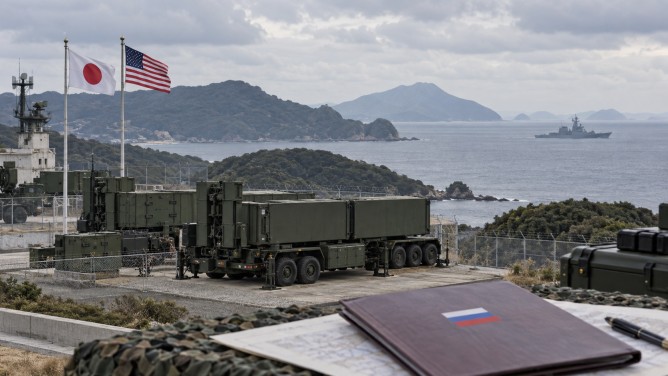
Tensions between Russia and Japan have flared up once again, as Russia formally protested Japan’s decision to install US-made Typhon medium-range missile systems on Kyushu, a southern Japanese island. Moscow argues that this military deployment poses a significant security threat to the region, potentially destabilizing peace and stability in Northeast Asia.
The protest emerged earlier this month through a formal note issued by Russia’s Foreign Ministry. Russian officials, including Deputy Foreign Minister Andrei Rudenko, have voiced their concerns directly to Japanese Ambassador Akira Muto during discussions in Moscow. Moscow urged Tokyo to reconsider and remove the missile systems, stressing the importance of addressing these security concerns seriously.
This dispute adds another layer to the already strained relations between Russia and Japan, who have long been at odds over the sovereignty of the southern Kuril Islands. These islands, currently under Russian control but claimed by Japan, have been a point of contention for decades. The territorial dispute has prevented both nations from signing a formal peace treaty to officially conclude the hostilities of World War II.
Russia maintains that its hold over the southern Kuril Islands is indisputable, while Japan continues to contest this claim. The recent disagreement over missile systems underscores the broader geopolitical tensions and complex historical issues that define the relationship between the two countries.