
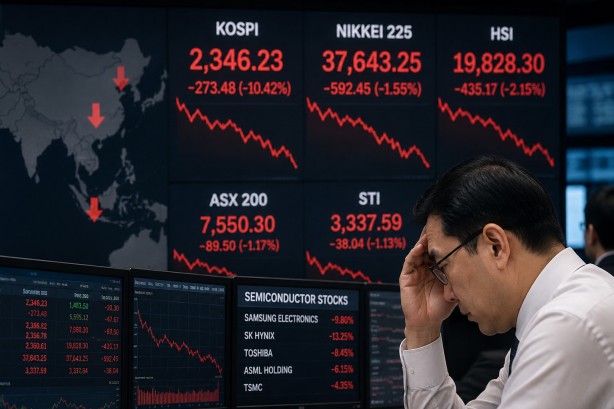
On Tuesday, Asian stock markets experienced a notable downturn, with South Korea taking a significant hit as the Kospi index tumbled by over 10%. This dramatic decline was primarily driven by substantial losses in the semiconductor sector. Major players like Samsung Electronics and SK Hynix saw their shares drop by approximately 12%. The sell-off was fueled by investor anxiety over the escalating competition posed by Chinese AI startups and chipmakers, which threatens to impede the growth trajectory of the global artificial intelligence market.
The impact of the downturn was felt across most key Asian markets, leading to a widespread retreat. Japan’s Nikkei, Taiwan’s Taiex, Hong Kong’s Hang Seng, and China’s Shanghai Composite all concluded the day in negative territory. Despite the overall regional slump, Australia’s S&P/ASX 200 index managed to buck the trend, closing with gains.
In the energy sector, oil prices experienced a decline as geopolitical tensions between the United States and Iran showed signs of easing. The de-escalation raised hopes for the possibility of renewed diplomatic discussions, which in turn alleviated some of the concerns about potential disruptions to global energy supplies.
Market participants closely monitored these developments, as the interplay between geopolitical dynamics and industry-specific challenges continues to influence investor sentiment and market performance. The situation underscores the delicate balance between competitive pressures in the technology sector and broader geopolitical factors that can sway financial markets.